What a Mid-Table Ranking Buys in Practice
A rank is a count of doors, not a promise about any one of them. What the position changes for a real traveller.
What is a passport ranking? It’s a score. A private index—most notably the Henley Passport Index—assigns a number to a country's travel document based on one main thing: how many places the holder can visit without getting a visa beforehand. A higher rank simply means more freedom to travel on a whim.
But here’s what most people get wrong. These rankings are not official. They aren't a measure of a country's global standing in the eyes of international law. Think of them as a practical tool for travelers, a snapshot of freedom based on constantly shifting diplomatic deals. This guide will break down how that strength is measured, the forces that shape it, its near-zero legal weight, and what the 2026 rankings show about who can move freely around the globe.
How Is the Strength of a Passport Determined?
The core metric is the "visa-free score." It's a simple count. How many countries and territories can you enter without arranging a visa before you leave home?
This score bundles a few different kinds of access:
- True visa-free entry: You just show up with your passport. That's it.
- Visa on arrival (VOA): You can get the visa right at the airport or border when you land. This is still considered highly convenient, though it might mean a bit of a queue after a long flight.
- Electronic Travel Authorisation (ETA): Think of this as a quick online check-in before your trip. It's not a full visa application. The United States ESTA is a perfect example of this lightweight pre-approval system.
Crucially, the major indexes don't count destinations that require a more involved, government-approved e-visa before you can even book your flight.
The Henley Passport Index is the most cited source, and it gets its data exclusively from the International Air Transport Association (IATA)—the trade group for the world's airlines. Other indexes exist, like the Arton Capital Passport Index. They might use slightly different rules, which explains why you sometimes see small variations in the rankings. The scoring is brutally simple: one point for each destination accessible without a prior visa. The total count is your score, and your rank is just where that score sits compared to everyone else. Passports with the same score get the same rank.
What Factors Make a Passport More Powerful?
A passport's power isn't random. It's the direct result of a country's diplomatic maneuvering, economic health, and political stability. A high rank is a vote of confidence from the rest of the world.
Diplomatic Relationships & Reciprocity This is the big one. A country's network of positive diplomatic ties is the engine of passport power. These relationships often produce reciprocal visa waiver agreements. It's simple. If Country A lets Country B's citizens in without a visa, Country B is far more likely to return the favor. This principle is the absolute foundation of visa-free travel.
Economic Stability and Strength Wealthier countries tend to have stronger passports. Why? Because citizens from high-income nations are seen as a lower risk. The assumption is that they are less likely to overstay their welcome, work illegally, or strain the host country's social services. Other nations see these visitors as tourists and business people who will spend money and leave, making it an easy decision to grant them visa-free access.
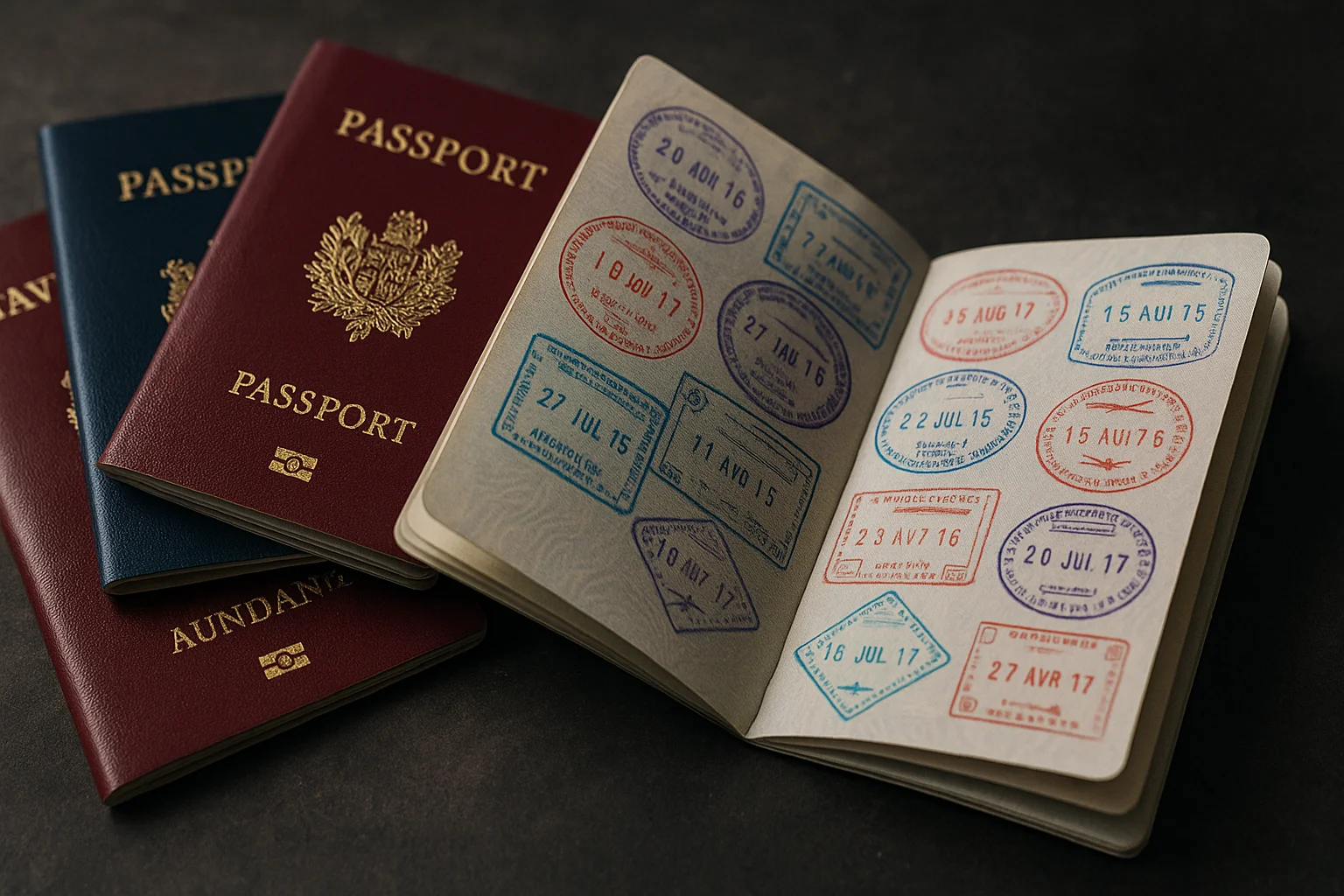
Political Stability and Security Standards Countries with a history of stability, low crime, and a working rule of law are viewed as reliable partners. Beyond that, the physical security of the passport itself is critical. When a nation invests in high-tech security features—like biometric chips, complex holograms, and special inks—it makes the document much harder to forge. This technical trust is a huge factor; it makes other countries feel comfortable waiving their visa requirements.
Regional Blocs and Agreements Membership in a powerful club can supercharge a passport's strength. The best example is the European Union and its associated Schengen Area. Directive 2004/38/EC gives citizens of member states incredible freedom to move and live within the bloc. This collective power also gives them a much stronger hand when negotiating for visa waivers with countries outside the EU.
What are the "Top 10 Strongest Passports in the World?"
The exact order changes slightly year to year, but a familiar group of countries always crowds the top of the rankings. Their citizens can typically visit over 190 destinations without needing to plan for a visa.
The Top 10 Strongest Passports in the World
According to early 2026 data, the list is a mix of European and wealthy Asian nations. Countries like Singapore, Spain, Italy, Germany, France, and Japan are consistently at the peak. The incredible access these passports grant is a direct reflection of their global connections and stable economies.
The Strongest Passports in the World are Often Nordic
You'll almost always find Nordic passports near the top. The Sweden passport, Denmark passport, Finland passport, Norway passport, and Iceland passport are all fixtures in or around the top 10. Their strength comes from a combination of economic and political stability, membership in the Schengen Area (for most), and a long tradition of open, global-minded diplomacy.
The Bottom of the Rankings
At the other end of the spectrum are passports from countries struggling with political instability, conflict, or diplomatic isolation. The passports of Afghanistan, Iraq, and Somalia typically offer access to fewer than 30 destinations. This isn't just a low score on a chart; it severely limits the ability of their citizens to travel for work, education, or family.
What Do Passport Rankings Mean in a Legal Context?
This is essential to understand: a "passport ranking" has virtually no direct legal meaning. It is a commercial metric. Nothing more.
Private Index, Not International Law A rank from a company like Henley & Partners carries no weight in international law. No treaty or convention forces one country to grant visa-free access to another based on a commercial ranking. For example, the 1963 Vienna Convention on Consular Relations grants you the right to consular assistance (like speaking to your embassy if arrested abroad), but it is completely silent on the right to enter a foreign country without a visa. Visa policies are an expression of national sovereignty and bilateral deals. End of story.
Nationality vs. Mobility A passport proves two things: who you are and what country you belong to. The fundamental rights that come with nationality—like the right to enter your own country and protection from being made stateless—are governed by national laws and treaties like the 1961 Convention on the Reduction of Statelessness. A passport's rank measures only one specific, non-guaranteed privilege: the convenience of short-term travel to other countries.
Case Law Confirms the Distinction International courts have always focused on the core rights of nationality, not travel convenience. The famous Nottebohm (Liechtenstein v. Guatemala) case in 1955 explored the idea of a "genuine link" needed for a state to even offer diplomatic protection. More recently, the Jadhav Case (India v. Pakistan) in 2017 was all about a detained person's right to consular access under Article 36 of the Vienna Convention. If you're arrested abroad, this right is crucial—it means your government must be notified, and you have the right to communicate with your consulate. Missing this step can be grounds for legal challenges, as seen in the Jadhav case.
These cases all reinforce the same point. The legal heart of nationality is about a state's duties to its citizens—protection, justice, and basic rights—not a right to visa-free travel based on a passport's "power."
How Have Passport Rankings Changed Over Time?
Passport rankings are not fixed. They are constantly shifting, mirroring our changing geopolitical world, new technologies, and security worries.
What is the Historical Context of Passport Rankings?
Looking at past rankings tells a story about global shifts.
- Passport ranking 2020: The pre-pandemic rankings of 2020 now look like a high-water mark for global mobility. Japan was at the top, and the world seemed to be steadily opening up.
- Passport ranking 2023: By 2023, the rankings reflected the new post-pandemic reality. Shifting alliances and new security concerns began to take hold. A major event was the EU's partial suspension of visa-free access for Vanuatu's passport, showing just how fast a bloc-level decision can tank a passport's power.
- Passport ranking 2025: In 2025, the proliferation of electronic travel authorization systems started to complicate the definition of "visa-free" travel, adding a new layer to the rankings.
What is the Outlook for Passport Ranking 2026?
While we can't know for sure, a few trends will shape mobility in 2026. EU and high-income Asian countries will likely continue to dominate. The biggest change will be the full rollout of the European Union's ETIAS (European Travel Information and Authorisation System). It’s not a visa, but it adds a mandatory pre-travel screening for many nationalities who used to enjoy completely unrestricted access to the Schengen Area. This subtly redefines what that travel freedom means. Meanwhile, the UK passport continues to find its new post-Brexit standing, now relying on individual agreements instead of the power of the EU bloc.
What is the Ranking of Specific Passports?
Global trends are interesting, but what you really want to know is how your own passport stacks up. Here's a look at some of the most frequently asked-about passports.

What ranking does the U.S. passport have in the world?
The United States passport is a perennial top-tier document, usually found around 6th or 7th place. It gives its holders visa-free or visa-on-arrival access to more than 185 destinations. The main reason it doesn't always hit the absolute top spot is a lack of reciprocity; there are still a handful of countries that US citizens need a visa for, while their citizens can enter the US visa-free under the Visa Waiver Program.
What is the Portugal Passport Ranking?
The Portugal passport ranking is consistently among the world's elite, often landing in the top 5. Why? As a full member of the European Union and the Schengen Area, its holders gain extensive mobility rights. This means you can live, work, and travel across Europe with minimal friction, plus enjoy visa-free access to many other countries worldwide. It's a powerful tool for global mobility.
What is the Brazil Passport Ranking?
The Brazil passport ranking sits comfortably in the upper-middle tier, usually around the top 20 globally. It grants excellent visa-free travel across South America and allows for short tourist stays in Europe's Schengen Area. That said, its power is limited by visa requirements for North America and key parts of Asia and Oceania, placing it a tier below the world's most powerful passports.
Do Passport Colours Have Any Meaning?
Many people assume a passport's color signals its strength. The truth? The color is a matter of national choice and has no official bearing on its power or ranking. It's pure aesthetics.
What is the Significance of Passport Colors by Country?
Four main colors coat the world's passports: red, blue, green, and black.
- Red: Often chosen by countries with a historical or current communist system. But it's also the signature burgundy of the European Union, adopted to signify unity among member states.
- Blue: A common choice for nations in the "New World"—think the United States, Canada, Australia, and many South American countries.
- Green: Many countries with large Muslim populations select green, a color considered sacred in Islam. The green passport is thus associated with nations like Pakistan, Saudi Arabia, and Morocco.
- Black: As the least common color, black is often chosen for practical reasons. It's durable, doesn't show dirt easily, and makes a country's official coat of arms pop in high contrast.
Ultimately, the color is simply a reflection of national identity. It won’t change your experience at a border control desk or affect your visa requirements one bit.
This article is published by an independent law firm for informational purposes only and does not represent or claim affiliation with any government body, international organization, or official authority.
Questions
Frequently Asked Questions
A passport's strength comes down to its "visa-free score." This number represents all the countries and territories you can enter without a pre-arranged visa. The score includes true visa-free access, destinations offering a visa on arrival (VOA), and those requiring a simple Electronic Travel Authorisation (ETA) instead of a full visa.
Rudimentary travel documents have existed for centuries. The modern passport, however, was largely standardized after World War I. Following a 1920 League of Nations conference, the familiar booklet-style format was established, laying the groundwork for the passports we carry today.
The U.S. passport is consistently powerful, typically ranking between 5th and 8th globally. This provides holders with visa-free or visa-on-arrival access to over 185 destinations. It falls just shy of the absolute top spots held by some European and Asian passports because a handful of countries still require visas for U.S. citizens.
Modern passports are marvels of security. They are built from special paper and polymer compounds designed to resist tampering. Inside, you'll find a host of security features: watermarks, holograms, security threads, and often a rigid polycarbonate data page with a laser-engraved photo. Most are now e-Passports, which contain a chip storing your biometric data, like a digital facial image, making forgery incredibly difficult.
Specific 2026 rankings aren't finalized yet; they're constantly shifting based on new diplomatic agreements. Trends, however, strongly suggest that EU countries (Spain, Germany, Italy) and high-income Asian nations (Singapore, Japan) will continue to dominate. The full rollout of the EU's ETIAS system is a key factor to watch, as it will directly impact the visa-free scores for dozens of non-EU passports.
The top 10 is dynamic, but it’s a recurring cast of characters with strong economies and stable diplomacy. As of early 2026, the group usually includes Singapore, Japan, Spain, Germany, Italy, France, Finland, South Korea, Sweden, and the Netherlands. While the exact order shifts with each new index update, these countries consistently offer the most powerful travel freedom on the planet. { "@context": "https://schema.org", "@graph": [ { "@type": "Article", "headline": "A Practical Guide to What Passport Ranking Means for Global Travelers", "datePublished": "2026-01-01", "dateModified": "2026-
Contact Us
Schedule Your Free Case Evaluation Today
Share the details of your situation with our team, and we'll provide a prompt, confidential response. We're here to listen, answer your questions, and help you understand your legal options.
Send Us a Message
Reach Us Directly
All consultations are strictly confidential and protected by legal professional privilege.